
Is Sora Shutting Down? The Best Alternatives After the Sora App Shutdown (2026)
If you are searching for 'Sora shutting down,' here is what happened on March 24, 2026, and which AI video tools now make the most sense: Veo 3, Seedance, Kling, Runway, Hailuo, and a multi-model workflow.
If you searched for "Sora shutting down", the short answer is simple: on March 24, 2026, OpenAI confirmed the shutdown of the standalone Sora app, and that immediately changed how creators think about AI video workflows.
The bigger question is not whether Sora deserved the hype. The bigger question is what you should use now if you still need cinematic AI video, reliable iteration, and a workflow that will not collapse the moment one app disappears.
That is what this article is for.
Instead of treating this as a panic post, I am going to do three things:
- clarify what "Sora shutting down" actually means for creators,
- compare the best replacement options, including Veo 3, Seedance, Kling, Runway, and Hailuo,
- explain why the strongest answer in 2026 is usually not one model, but a multi-model stack you can switch between depending on the shot.
What "Sora shutting down" actually means
The phrase is now everywhere, but it needs context.
What happened is not just "people are mad on social media." Multiple major outlets reported on March 24, 2026 that OpenAI was shutting down the Sora app / Sora video platform experience. That matters because a lot of creators were not using Sora as abstract research anymore. They were using it as a practical production tool, an idea-generation app, and in some cases a short-form publishing workflow.
For creators, that leads to four immediate consequences:
-
Continuity now matters as much as quality.
A model can be impressive and still be a risky workflow bet. -
Single-model dependency looks weaker than it did six months ago.
If one app vanishes, your team should still be able to ship. -
The market has fully moved into replacement mode.
People are no longer asking, "Is Sora the future?" They are asking, "What can replace it this week?" -
The practical winner is the tool you can access, iterate with, and swap out fast.
That is why Veo 3, Seedance, Kling, Runway, and Hailuo are suddenly part of the same conversation.
One nuance is important here: even if pieces of OpenAI's video work continue under the broader Sora umbrella, the standalone app shutdown is enough to change buying behavior. For working creators, agencies, and in-house teams, that is the event that matters.
What a real Sora alternative needs to do
Most "best alternatives" lists fail because they compare branding instead of workflow.
If you are replacing Sora in real work, you do not just need "another AI video model." You need a replacement that solves the same practical jobs:
- turning prompts into usable video fast,
- handling both concepting and polished outputs,
- giving you enough control over motion, framing, and style,
- fitting your delivery format, especially short-form social or ad creative,
- staying accessible enough that your team can keep iterating.
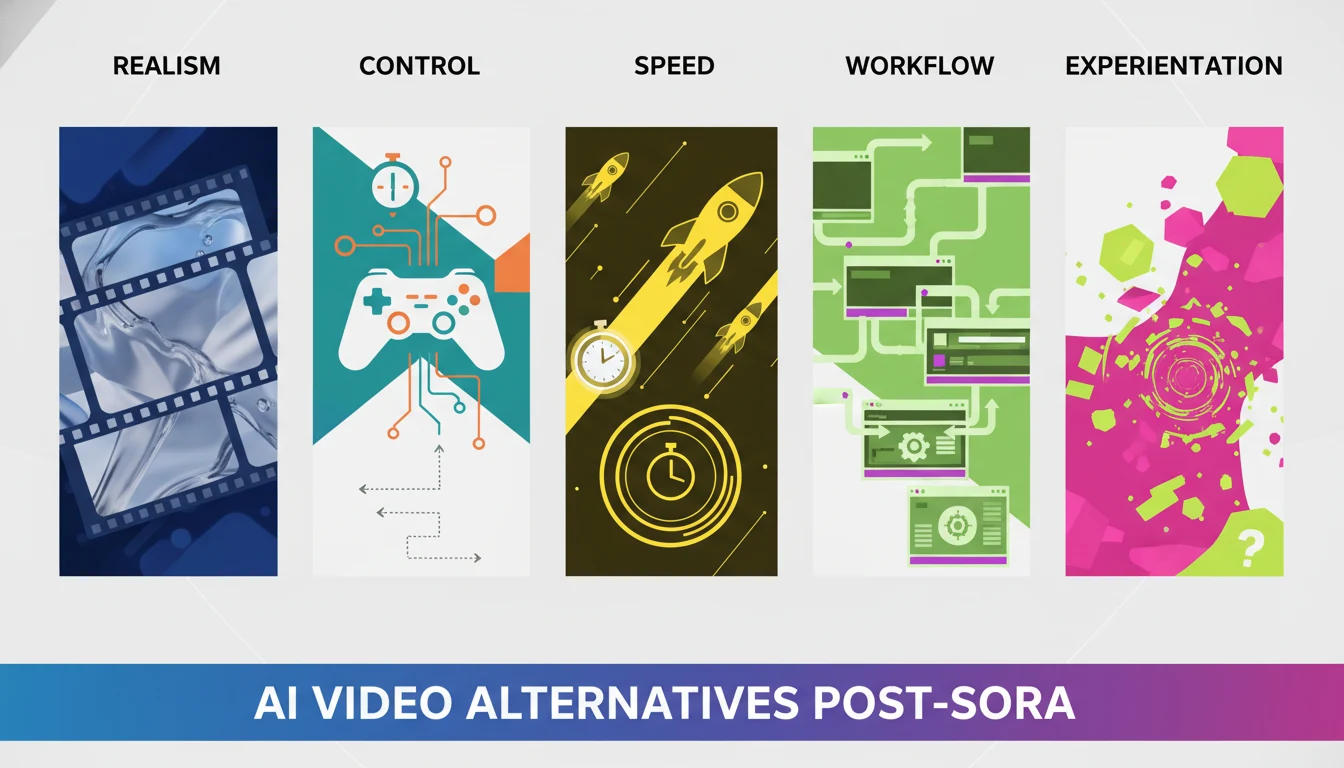
That is why I would evaluate replacements using five dimensions:
| Dimension | Why it matters after the Sora app shutdown | What to look for |
|---|---|---|
| Output realism | You still need shots that feel premium | Camera behavior, lighting, motion stability |
| Control | Replacements should reduce reroll fatigue | Prompt adherence, reference support, editability |
| Speed | Teams need fast creative iteration | Short queue times, quick previews, repeatable results |
| Workflow fit | One model rarely covers every shot type | Text-to-video, image-to-video, editing, extensions |
| Availability | Great models are useless if access is unstable | Public availability, predictable pricing, multi-model access |
That framework immediately changes the conversation. It stops being "Which model is coolest?" and becomes "Which model is the most useful replacement for my actual production pipeline?"
The best Sora alternatives right now
Here is the short list that matters in 2026.
| Tool | Best for | Main strength | Main trade-off |
|---|---|---|---|
| Veo 3 | Premium realism and cinematic shots | Strong world coherence, camera quality, high-end output | Usually slower and more expensive for bulk iteration |
| Seedance | Prompt control and fast creative direction | Strong instruction following, creator control, fast concepting | Less of a "set it and forget it" cinematic aesthetic than Veo |
| Kling | Social-first motion and stylized energy | Dynamic movement, visually punchy outputs, creator-friendly feel | Results can be less consistent shot-to-shot than top premium options |
| Runway | Teams that need editing workflow tools | Mature creator workflow, edit-centric features, familiar pipeline | Pure generation quality is not always the strongest in class |
| Hailuo | Budget-conscious experimentation | Good value for rapid testing and idea generation | Usually not the first pick for final hero shots |
| Wan 2.5 | Flexible prototyping and creative exploration | Useful for fast iteration across formats | Not the strongest single answer for premium commercial work |
That table gives you the fast answer. The sections below give you the decision-making detail.
Veo 3: the strongest choice if realism is your top priority
If your first reaction to the Sora app shutdown was, "I still need premium cinematic output," Veo 3 is the first place to look.
Google DeepMind positions Veo 3 as a top-tier video generation model with expanded creative control, and the current ecosystem around it reflects that positioning. It is the tool people reach for when they care most about:
- grounded camera behavior,
- high-end ad-style realism,
- polished scene composition,
- premium-looking short clips for campaigns and launches.
Where Veo 3 stands out is not just raw realism. It is the feeling that the shot knows what a camera is supposed to do. That matters when you are producing:
- product spots,
- launch trailers,
- luxury brand visuals,
- cinematic b-roll,
- social ads that need to feel expensive fast.
Where it is weaker as a full Sora replacement is speed of experimentation. If your workflow is "generate twenty rough directions before lunch," Veo 3 can feel heavier and more expensive than creator-oriented alternatives. In other words:
- best for final-looking shots,
- less ideal as the only model in your stack.
Seedance: the best replacement if control matters more than hype
If Veo 3 is the premium realism pick, Seedance is the control pick.
ByteDance's current Seedance positioning centers on tighter audio-visual generation, creator control, and a workflow that feels built for people who want to tell the model exactly what to do. That makes it extremely appealing for creators who were frustrated by:
- vague prompt interpretation,
- reroll-heavy workflows,
- beautiful output that still missed the brief,
- tools that look strong in demos but feel slippery in real use.
Seedance is especially compelling for:
- marketers who need clearer prompt adherence,
- creators producing repeatable content systems,
- teams building multi-shot or multi-asset campaigns,
- anyone who values control over "happy accident" aesthetics.
The big reason Seedance belongs high on this list is simple: after a disruption like the Sora app shutdown, the market rewards models that are usable under deadline. Seedance feels designed for that kind of pressure. It is less about mystique and more about getting to the right result faster.
If you are replacing Sora for day-to-day work, Seedance is one of the smartest moves available right now.
Kling: still one of the strongest creator-friendly alternatives
Kling remains in the conversation for a reason. Even as the premium end of the market gets more crowded, Kling still appeals to creators who want motion, energy, and outputs that feel made for the internet rather than made for a brand film boardroom.
Kling is a good fit if you care about:
- punchier movement,
- short-form social content,
- stylized or attention-grabbing visuals,
- fast experimentation with creator-first aesthetics.
This is why Kling still matters after the Sora shutdown. Not every creator needs a hyper-controlled, photoreal commercial shot. Some need:
- scroll-stopping vertical clips,
- stylized motion with personality,
- repeatable content for TikTok, Reels, Shorts, and organic growth.
That is where Kling can outperform more "serious" tools in practice. It is often a better answer for content velocity than for final-frame perfection.
The trade-off is consistency. If your team needs precise brand matching across multiple shots, Kling may not be the only model you want to rely on. But as part of a mixed workflow, it remains one of the best post-Sora options available.
Runway: the best choice for teams that care about workflow, not just generation
A lot of alternatives articles reduce everything to model quality. That is a mistake.
For many teams, Runway is not the "prettiest single generation" winner. It is the winner because it behaves like a production tool. That matters if your post-Sora question is:
Which replacement helps my team actually finish projects?
Runway earns its place because it fits neatly into creator workflows that involve:
- editing,
- versioning,
- directed iteration,
- team handoff,
- pipeline familiarity.
If you are an agency, in-house creative team, or advanced solo creator, Runway is a strong replacement because it reduces workflow friction. That does not mean it beats Veo 3 or Seedance at every shot. It means it often beats them at getting from idea to deliverable.
Use Runway when:
- you value editing control,
- you already think in terms of creative pipeline,
- you want a dependable system rather than a single showcase model.
Hailuo and Wan 2.5: the practical picks for experimentation and budget sensitivity
Not every replacement decision is about getting the best hero shot.
Sometimes you just need:
- more ideas,
- more volume,
- cheaper prompt testing,
- faster concept proofing,
- a lower-cost way to discover what should be produced at premium quality later.
That is where Hailuo and Wan 2.5 matter.
These tools are rarely the strongest answer if your only metric is "most premium final ad frame." But that is not the only metric that matters after the Sora app shutdown. In a lot of teams, the actual question is:
Which model lets us test more directions without burning too much money or time?
For that job, Hailuo and Wan 2.5 are useful. They are especially valuable when paired with stronger final-pass models. A practical stack might look like this:
- use Hailuo or Wan 2.5 for exploration,
- move to Seedance for control-heavy refinement,
- finish hero shots in Veo 3 when realism matters most.
That is a much stronger replacement strategy than searching for one mythical "next Sora."
Which alternative should you choose?
If you want the simplest answer, use this table instead of overthinking it.
| Your situation | Best first choice | Why |
|---|---|---|
| You want the most premium-looking cinematic output | Veo 3 | Strongest choice for realism-first work |
| You need better prompt control and less rerolling | Seedance | Strong fit for directive workflows and repeatability |
| You create fast-moving short-form social content | Kling | Good for energy, motion, and creator-style output |
| You care about workflow and editing infrastructure | Runway | Strong for real production pipelines |
| You need cheap, high-volume experimentation | Hailuo or Wan 2.5 | Better for testing and concept iteration |
| You do not want five separate subscriptions and interfaces | Multi-model workflow | Most resilient answer after a platform shutdown |
Here is the more useful version of that advice:
- choose Veo 3 if output quality is the top priority,
- choose Seedance if control and repeatability matter most,
- choose Kling if you are optimizing for short-form attention,
- choose Runway if your team needs workflow depth,
- choose Hailuo or Wan 2.5 if budget and iteration volume dominate the decision.
For most serious creators, the best answer is not one row. It is two or three rows combined.
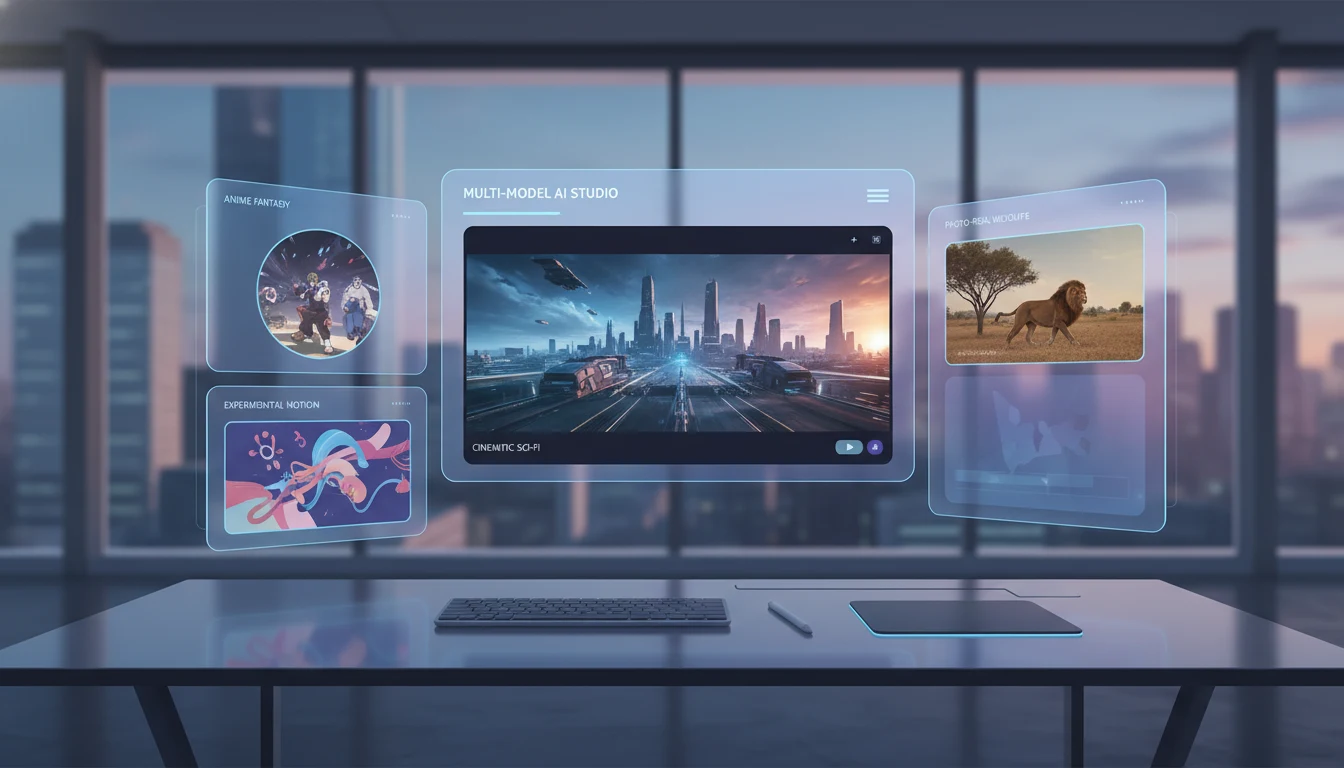
Why a multi-model workflow is the real post-Sora answer
The Sora app shutdown exposed a problem many creators already suspected: building your entire workflow on one model is fragile.
The stronger strategy is to work from the shot backward:
- use one model for premium realism,
- another for control,
- another for speed,
- another for testing,
- then ship from a single workspace.
That is the real reason a platform like Vidzoo AI makes sense in this moment.
Its public positioning is not "bet everything on one model." It is "access top AI video and image models in one place." That matters because the homepage explicitly frames the product around a broader stack that includes Sora 2, Veo 3, Seedance, Kling, Runway, Hailuo, and more. For creators, that changes the decision from:
Which replacement should I marry?
to:
Which model should I use for this exact shot, this exact campaign, and this exact deadline?
That is a much better question.
In practical terms, a one-stop model hub helps in five ways:
- you stop bouncing between separate logins and billing setups,
- you can compare outputs faster,
- your team learns one workflow instead of five interfaces,
- you reduce disruption if one provider changes access or pricing,
- you match the model to the job instead of forcing every job into one model.
After the Sora shutdown, that last point is the one that matters most.
The smartest replacement strategy for most creators
If you are still deciding what to do next, use this practical framework:
Choose Veo 3 if:
- your output needs to look premium immediately,
- you are making ads, trailers, or cinematic brand assets,
- quality matters more than generation volume.
Choose Seedance if:
- your current pain is reroll fatigue,
- you need more directability and prompt obedience,
- you care about systematizing content production.
Choose Kling if:
- you are a social-first creator,
- you want motion that feels punchy and internet-native,
- you prioritize speed and attention over maximum polish.
Choose Runway if:
- your process includes editing, iteration, and handoff,
- you want a creator workflow tool, not just a generation engine,
- your team already works in production-style pipelines.
Choose a multi-model stack if:
- you create for multiple formats,
- your clients have different aesthetic needs,
- you need backup options when one provider changes access,
- you do not want the next shutdown headline to wreck your production calendar.
That last one is where the market is clearly going.
FAQ
Is Sora completely gone?
What changed in the market on March 24, 2026 was the shutdown of the standalone Sora app experience. For creators, that is enough to force a replacement decision even if parts of OpenAI's broader video work continue elsewhere.
What is the best direct alternative to Sora?
If by "best" you mean the highest-end cinematic replacement, Veo 3 is the strongest first answer. If you mean the most controllable and practical replacement for daily creation, Seedance is arguably the better fit.
Is Kling better than Veo 3?
Not as a universal answer. Veo 3 is the better pick for premium realism. Kling is often the better pick for fast-moving, social-first, creator-style content.
What if I do not want to keep switching between tools?
Then the best move is not choosing one "winner." It is choosing a platform strategy that gives you access to multiple top models from one workflow.
What is the best replacement for agencies and in-house teams?
Usually a combination of Veo 3, Seedance, and Runway-style workflow thinking. Teams need quality, control, and process reliability, not just a flashy demo.
Final verdict
If you came here because you typed "Sora shutting down" into search, here is the clear answer:
- yes, the Sora app shutdown is real and important,
- no, it does not mean AI video is over,
- and the best response is to switch from a single-model mindset to a multi-model workflow.
If you want one premium replacement, start with Veo 3.
If you want one practical control-first replacement, start with Seedance.
If you want creator-style momentum, keep Kling in your shortlist.
If you want resilience, use a workflow that lets you move between all of them without rebuilding your process every month.
That is the real lesson of the Sora app shutdown, and it is probably the most important one.

Author

Categories
More Posts
Sora 2 Pro Review: Complete Guide to OpenAI's Revolutionary AI Video Generator (2026)
In-depth review of OpenAI's Sora 2 Pro, analyzing its features, pricing, and how it stacks up against fierce competitors like Kling and Runway. Whether you are a filmmaker, marketer, or content creator, this guide will help you decide if Sora 2 Pro is the right tool for your workflow.

Seedance 2 Review: Why This AI Video Model Changed Everything
A comprehensive review of ByteDance's Seedance 2 AI video generator. We explore its multimodal architecture, native audio, resolution limits, and how it stacks up against Sora 2, Kling 3.0, and Runway Gen-4.
Nano Banana Pro Review: I Tested Google's Revolutionary AI Image Generator for 30 Days – Here's the Truth
In-depth review of Nano Banana Pro (Gemini 3 Pro Image). 30-day test results, comparison with Midjourney & DALL-E 3, pricing, and pro tips.
Newsletter
Join the community
Subscribe to our newsletter for the latest news and updates